Neptune CRM Location: Admin > Job Settings
This is only accessible to users with admin privileges.
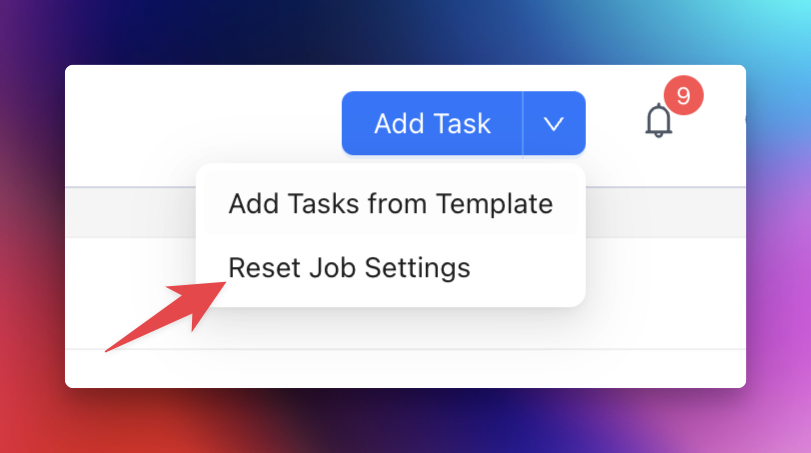
When a job is created, all job settings are copied directly onto that job. Changes to job settings will not affect jobs already created, however you can update the job settings on a job (so that they import the current job settings) by clicking on Reset Job Settings. This can be found in the Add Task dropdown menu on the job card.
Required Documents
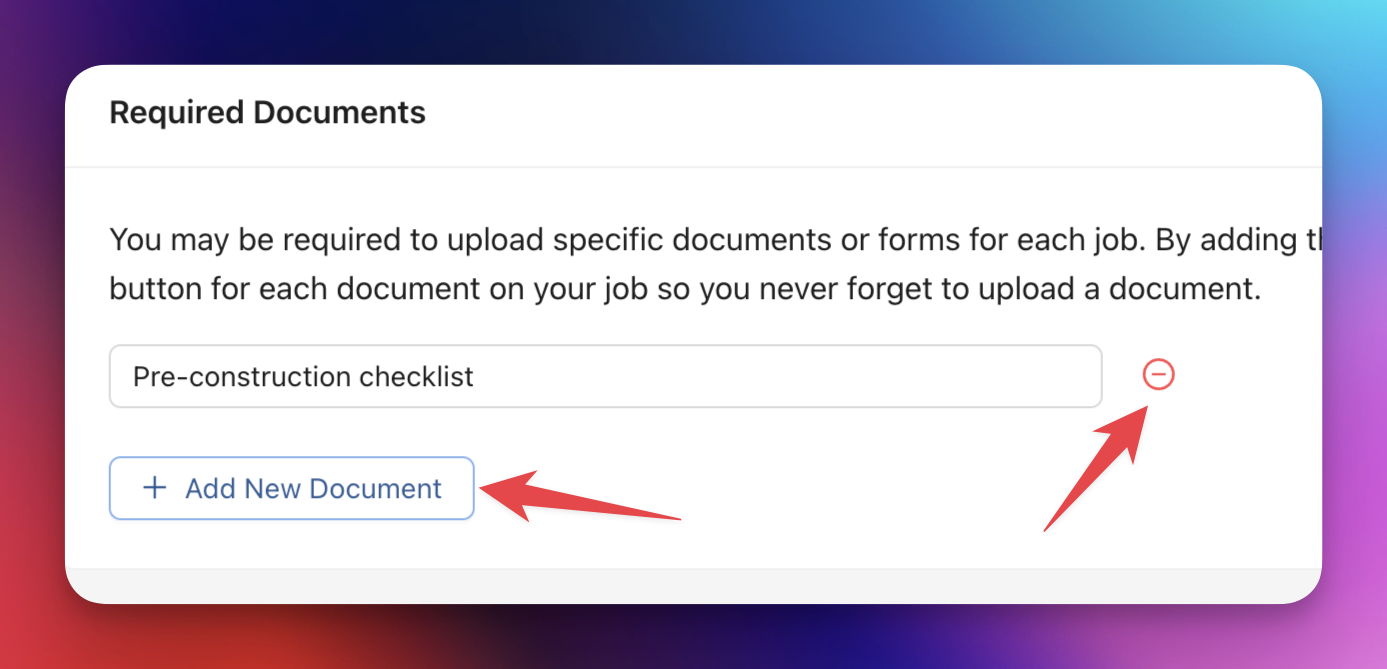
For every job, you may require the same set of documents or photos to be uploaded to Neptune. The Required Documents section is where you can define those documents.
To begin, click on the Add New Document button. This will reveal a text input field, where you can enter the name of the first required document (or upload). You can add as many required documents as you wish in your job settings. Just click on Add New Document again to create more. If you want to delete a document from this list, press the red icon next to the document name that looks like a circle with a minus symbol.
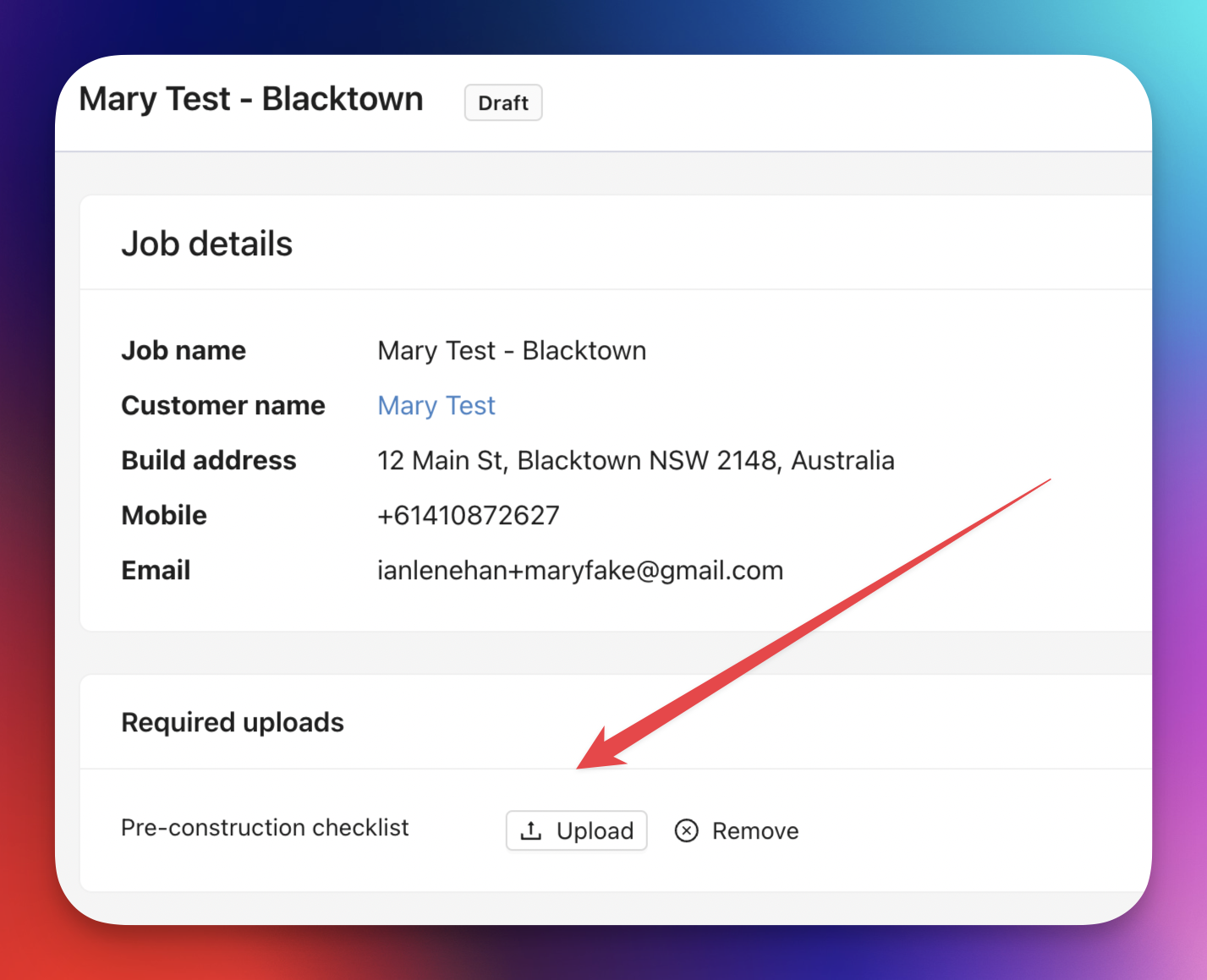
If you have added any required documents and then created a job, you will see the list of required documents on the job card, alongside an upload button for each. When you upload a file using the upload button beside one of the required documents, it saves a file with that name to the customer card and job card, and then removes the required document from the list on the job card. If you don’t need that document for a job, you can click the Remove button next to it.
Custom Forms
Create internal forms for staff and contractors to complete when they start or finish a task. Select Add new, enter the form name and questions, choose the question types, and mark required answers. Save the form before selecting it on a task or template.
Job Settings offers Text, Select, and Checkbox questions. Use the standard Internal Task Forms workspace for the full question set, or keep using this editor for forms already managed here.
Task Templates
Task Templates are reusable individual task blueprints. You save task items in a template library and reuse them across many jobs and job templates.
Click Add Task Template to open a modal and save a new task template. Each template can include:
- Title: The task name (for example Excavation).
- Description: Optional extra context.
- Duration: Amount + unit (minutes, hours, or days) used to auto-calculate the task end date when creating from template.
- Gap after task: Amount + unit (minutes, hours, or days) used to suggest the next task start when running a job template sequence.
- For day-based gaps, Count gap as chooses Working days or Elapsed days. Working days use configured availability and holidays; elapsed days count calendar days. See linked scheduling.
- Start form and End form: Optional custom forms required in mobile when starting/completing the task.
- Default assignee: Optional default contractor/user for this task.
Saved task templates appear in a compact list. For each item:
- Use the Edit icon to update it in a modal.
- Use the ellipsis menu to Archive or Delete.
Job Templates
Job Templates let you build an ordered sequence of Task Templates for guided scheduling on a job.
Click Add Job Template to open a drawer and define:
- Name: Template name shown in the job task menu.
- Business days only: When enabled, generated dates respect working days and configured holidays.
- Ordered task templates: Add, remove, and reorder steps.
- Step gap override (optional): Per step, you can override that step’s default Task Template gap. The UI shows the current default gap to help decide whether to override.
Saved job templates are shown as a compact list with:
- Edit icon (opens drawer).
- ellipsis menu for Archive and Delete.